The Curse of Canaan Was Never About Nakedness. Here Is What Ham Did
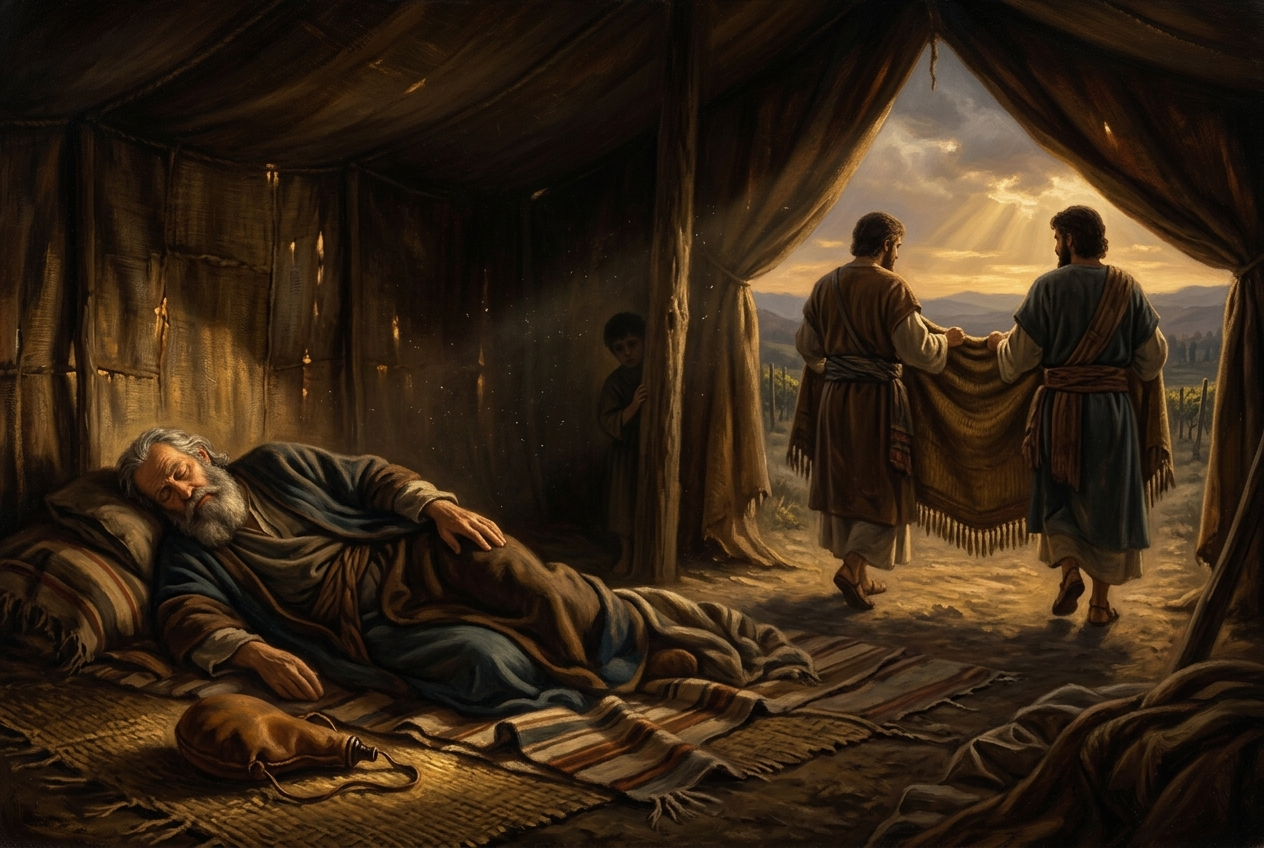
A man plants a vineyard, drinks too much wine, and falls asleep uncovered in his tent. His son sees him. When the man wakes up, he does not curse that son. He curses his grandson. So why did Noah curse Canaan, a child who was not even in the story, instead of Ham, the son who was?
On this episode of Discovering Truth, Daniel Duval takes on one of the strangest scenes in Genesis. He argues the answer sits in plain sight, that it is far heavier than an awkward moment in a tent, and that it speaks to anyone carrying pain from their family line. This summary hits the highlights; watch the full teaching to follow Daniel's reasoning verse by verse.
What Does "Uncovered His Father's Nakedness" Really Mean?
Duval starts with a rule he returns to often: the Bible interprets itself. When a phrase seems odd, find where Scripture uses it elsewhere and let one passage define the other.
Genesis 9:22 reads, "And Ham, the father of Canaan, saw the nakedness of his father, and told his two brothers outside" (NKJV). On its own, that sounds like Ham saw something he should not have. But Leviticus 20:11 uses the exact phrase and defines it: "The man who lies with his father's wife has uncovered his father's nakedness; both of them shall surely be put to death. Their blood shall be upon them" (NKJV).
In the language of the Torah, uncovering your father's nakedness is not about seeing an undressed parent. It describes sleeping with your father's wife. Duval points out that a passing glance could never explain a curse that lands on an entire lineage and, eventually, an entire land.
Why Did Noah Curse Canaan Instead of Ham?
Duval draws attention to a detail most readers skim past. Twice, back to back, Genesis pauses to note that Ham was the father of Canaan: once in Genesis 9:18 and again in 9:22. No other grandson gets named. It reads like a deliberate note in the family record, written so no one could miss it.
His conclusion: Ham slept with Noah's wife, and Canaan was conceived through that act. When Shem and Japheth walked in backward with a garment, Duval teaches, they were covering their mother. That is why the record keeps repeating whose son Canaan was: everyone was to know that Noah had three sons, and that the fourth boy in the household was not Noah's child at all.
Genesis 9:24-25 says, "So Noah awoke from his wine, and knew what his younger son had done to him. Then he said: 'Cursed be Canaan; A servant of servants He shall be to his brethren'" (NKJV). Canaan carried the curse because Canaan embodied the act. In Duval's words, he represented the first incest-based bloodline after the flood. Daniel walks through every one of these details, and the verses behind them, in the full episode.
Why Would Incest Defile a Whole Bloodline and Its Land?
The episode is careful here, and so is this summary. Duval teaches that abuse inside a family opens a door between that family line and the powers of darkness, and that the defilement also attaches to the land the family occupies. The land of Canaan later filled up with the very nations God commanded Israel to drive out, down to their possessions.
One more thing has to be said out loud, because this passage has been misused for centuries. The curse Noah spoke fell on Canaan and on the line that came from that act. It was never about skin color, and it never made any people group inferior. Generations used a twisted reading of this text to defend slavery and racism, and Scripture gives that reading no ground to stand on. What Genesis records here is a defiled act and its consequence, not a verdict on any race.
He then connects the ancient pattern to the present. In satanic cults and government-sponsored mind control programs, Duval explains, abuse by relatives is a standard protocol, used on purpose for what it does across generations. Bride Ministries has served survivors of ritual abuse for over a decade, and this teaching names the engine behind much of that pain. It also explains why bloodline-level deliverance sits at the center of the ministry's approach.
Can a Defiled Bloodline Be Set Free?
Duval is emphatic: coming from a defiled family line does not condemn you. Neither does surviving this kind of abuse. He teaches that God has sent a generation of overcomers into the earth for this exact assignment, to break cycles that have held families in bondage for thousands of years.
The tool he offers is bloodline repentance. One person stands before God as a representative of their family line, names what was done, turns from it, and asks Jesus to break its power over the generations to come. Duval closes by leading listeners through this prayer word by word; the full episode is the place to pray it with him.
Stay for the question and answer segment too. Duval fields two listener questions: how occultists trap souls in ordinary containers, and whether jewelry and heirlooms can carry a curse, and which items can be cleansed rather than destroyed. None of that made it into this summary, and neither did the prayer itself; press play below to get all of it from Daniel directly.
If your family story holds this kind of pain, you do not have to untangle it alone. The free BMI Healing Assessment takes about two minutes and points you toward the right healing path.
Take the Next Step Toward Healing
Start Your Healing Journey