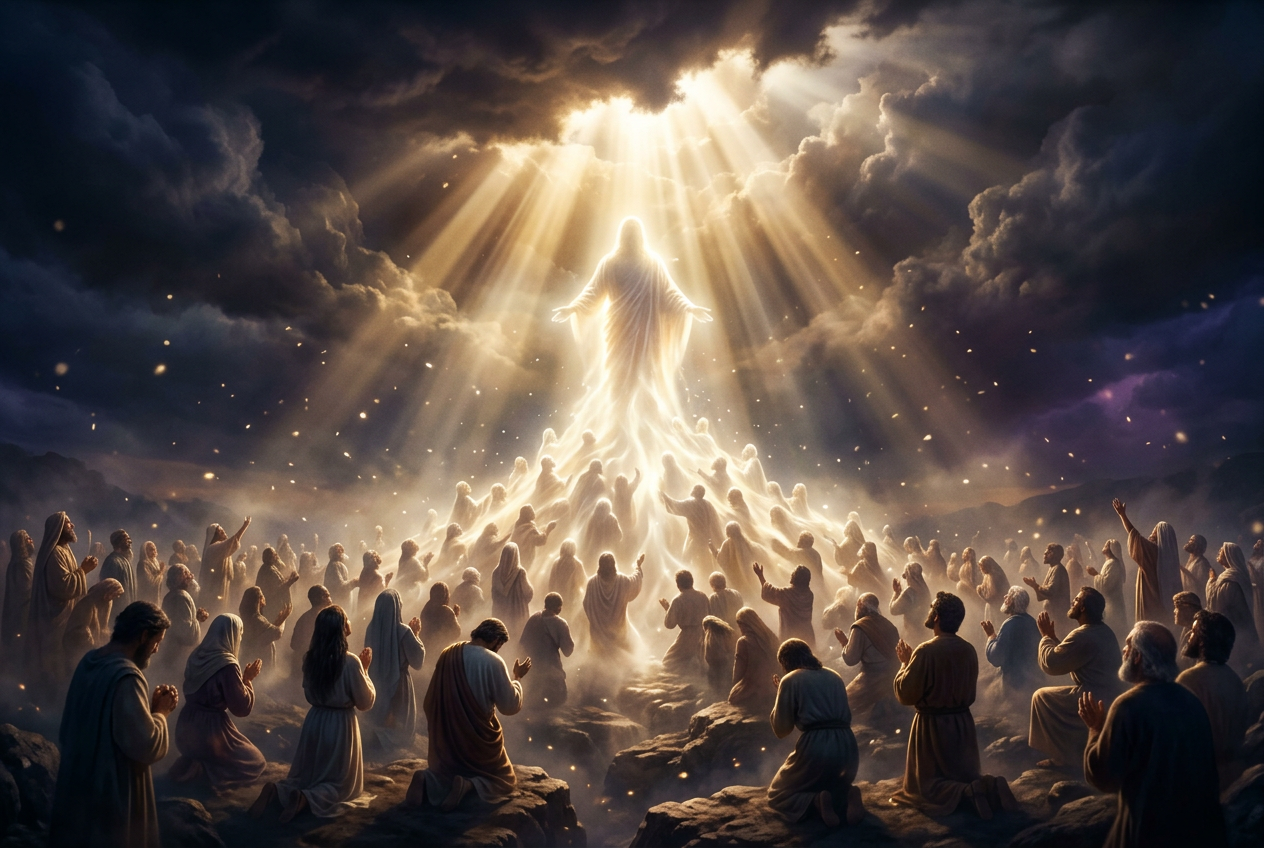
The Church Jesus Is Coming Back For: What Ephesians 4:13 Really Means
The Bible says something striking about how the story ends. Jesus is not coming back for a tired, divided, beat-up church. He is coming back for one that has grown up.
Daniel Duval, the founder of Bride Ministries, points to one short verse in the letter to the Ephesians as the heart cry of Jesus for His people. It describes a church so mature, so unified, and so close to her Lord that she finally looks like Him. Paul calls her glorious.
“that He might present her to Himself a glorious church, not having spot or wrinkle or any such thing, but that she should be holy and without blemish. (Ephesians 5:27)”
That is the goal. The natural question is, how does a church ever get there? The answer is in the chapter right before it.
What Makes a Church "Glorious"?
In Ephesians chapter four, Paul explains why God set leaders over the church in the first place. These leaders, sometimes called the fivefold ministry, are apostles, prophets, evangelists, pastors, and teachers. Apostles are sent ones who plant and build. Prophets carry what God is saying for the moment. Evangelists reach the lost. Pastors shepherd and care for people. Teachers ground the church in solid truth.
“And He Himself gave some to be apostles, some prophets, some evangelists, and some pastors and teachers, for the equipping of the saints for the work of ministry, for the edifying of the body of Christ, till we all come to the unity of the faith and of the knowledge of the Son of God, to a perfect man, to the measure of the stature of the fullness of Christ; (Ephesians 4:11-13)”
Read the end of that passage slowly. God gave the church leaders for a reason, and that reason has a finish line. The leaders keep working until four things become true of the whole body of Christ. Daniel Duval teaches that these four marks are the picture of the glorious church. When they are true of us, the work is done.
Here is each one in plain terms.
Mark One: Unity of the Faith
The first mark is unity of the faith. This is not everyone simply being nice to each other. It is the church believing the same true things about God, about herself, and about the Bible, because she finally sees what God actually meant.
Daniel Duval teaches that this kind of agreement does not come from loyalty to a denomination or a church handbook. It comes when people from every corner of the church gather around fully revealed truth and let go of the smaller boxes they used to defend. That shared body is the one Scripture pictures as living stones built together in Zion. He notes that the prophet Daniel was told to "seal the book until the time of the end" (Daniel 12:4), which means God held some understanding back until the final days. Part of growing into unity is receiving that fuller picture together, instead of each group guarding its own slice.
Does that sound impossible? Maybe. But impossible and untrue are not the same thing. The verse says the church will get there, so she will.
Mark Two: The Knowledge of the Son of God
The second mark is the knowledge of the Son of God. The word Paul uses here points to deep, personal knowing, not facts on a page. Daniel Duval describes it with one word: romance.
This is the difference between reading someone's profile and being in love with them. A bride is not handed off at a wedding because she studied the groom's background. She is handed off because she adores him. In the same way, the church is meant to know Jesus the way a bride knows the one she loves, not the way a student knows a subject.
This goes far past attending services, serving on a team, or even leading a Bible study. Those are good things, and none of them are the same as intimacy. Daniel Duval often teaches that you cannot fake this kind of closeness, and the church will not reach her full purpose until she has it.
Mark Three: A Perfect, Full-Grown Person
The third mark is becoming "a perfect man." The word translated perfect does not mean flawless. It means full-grown, of full age, mature.
When a person first comes to Christ, they are born again as a spiritual newborn. Just like a baby grows into an adult, that new life is meant to grow up. Daniel Duval points to a passage where the apostle John describes that growth in stages (1 John 2:12-14). John writes to little children, to young men, and to fathers. Those are not literal ages. They describe how far someone has matured in their walk with God.
Real maturity has nothing to do with how many years you have sat in a pew. A person can attend for forty years and still be a spiritual child. Maturity means Christ has actually been formed inside you.
“My little children, for whom I labor in birth again until Christ is formed in you, (Galatians 4:19)”
Paul noticed that the early church had plenty of believers but "not many fathers," meaning few who had grown all the way into spiritual adulthood (1 Corinthians 4:15). Daniel Duval teaches that in the last generation God intends to change that. He is raising up a body full of mature sons and daughters who carry real weight, not just attendance records.
Mark Four: The Measure of the Stature of the Fullness of Christ
The fourth mark is the hardest to put into words, and it is the most beautiful. It is "the measure of the stature of the fullness of Christ." Daniel Duval describes it as a place where it becomes difficult to tell the difference between the church and the Jesus she belongs to.
When we are saved, we are joined to God in spirit. The Bible says it plainly.
“But he who is joined to the Lord is one spirit with Him. (1 Corinthians 6:17)”
The fullness of Christ goes even further than that. It is the body of Christ growing until it looks like Jesus, acts like Jesus, and carries the very life of Jesus into the world. When He walked the earth, He had full control of His physical body. Daniel Duval teaches that before He returns, He intends to have that same kind of control of His body of believers. He is the head; we are the body. A head and a body are meant to move as one.
This is where Daniel Duval's current teaching adds something the church needs to hear. He often describes the future of the church not as a small remnant barely hanging on, but as a maturing people stepping into greater works. Jesus said His followers would do even greater works than He did (John 14:12). Bride Movement holds that a church growing into His fullness is exactly the kind of people who carry that promise, partnering with God to bring healing and freedom into a hurting world. The glorious church is not a fantasy at the end of history. She is being formed right now, person by person.
So What Does This Mean for You?
It is easy to read a passage about the whole church and feel like a spectator. But the glorious church is not built out of nothing. She is built out of people who grow up one at a time.
The four marks start in individuals. You can grow in real knowing of Jesus. You can let Christ be formed in you a little more this year than last year. You can choose unity over the urge to defend your corner. Maturity is not handed out at a finish line; it is grown along the way, in ordinary days.
For many people, that growth gets stuck. It is hard to draw close to God when old wounds, fear, or a sense of being unworthy keep getting in the way. That is not a sign of weak faith. It is a sign that something underneath needs gentle, deeper healing, and it was never meant to be carried alone. Bride Movement built a free healing assessment for exactly this kind of stuck place. It takes about two minutes, it is private, and it points you toward a next step.
You can also grow simply by drawing near to God in prayer. The free Bride Ministries Prayer Library holds tools that help people meet Him honestly, which is where real maturity always begins. If you want to dig deeper into what it looks like to grow up into Christ across every part of who you are, the teaching on the five levels of holiness with Arthur Burk maps that growth in a way that fits right alongside the four marks above.
The church Jesus is coming back for is glorious. The good news is that you do not have to wait for the whole body to get there before you start growing into your part of it.
Start Your Healing Journey
Take the Free Assessment