Why God Asks for a New Container Before He Pours
Most people believe the church should be united. Ask almost any believer and they will nod. Then look at the real world, with its thousands of denominations, its splits, and its arguments over doctrine, and unity starts to feel like a nice idea that never actually happens.
Daniel Duval, the founder of Bride Ministries, teaches that this gap is not random and it is not hopeless. There is a pattern behind it. Once you see the pattern, division stops looking like chaos and starts looking like a story God has been telling for a very long time. The key to that story is a short picture Jesus gave about wine and wineskins.
What Did Jesus Mean by New Wineskins?
Jesus tied this picture to a simple problem from everyday life in His day.
“Nor do they put new wine into old wineskins, or else the wineskins break, the wine is spilled, and the wineskins are ruined. But they put new wine into new wineskins, and both are preserved. (Matthew 9:17)”
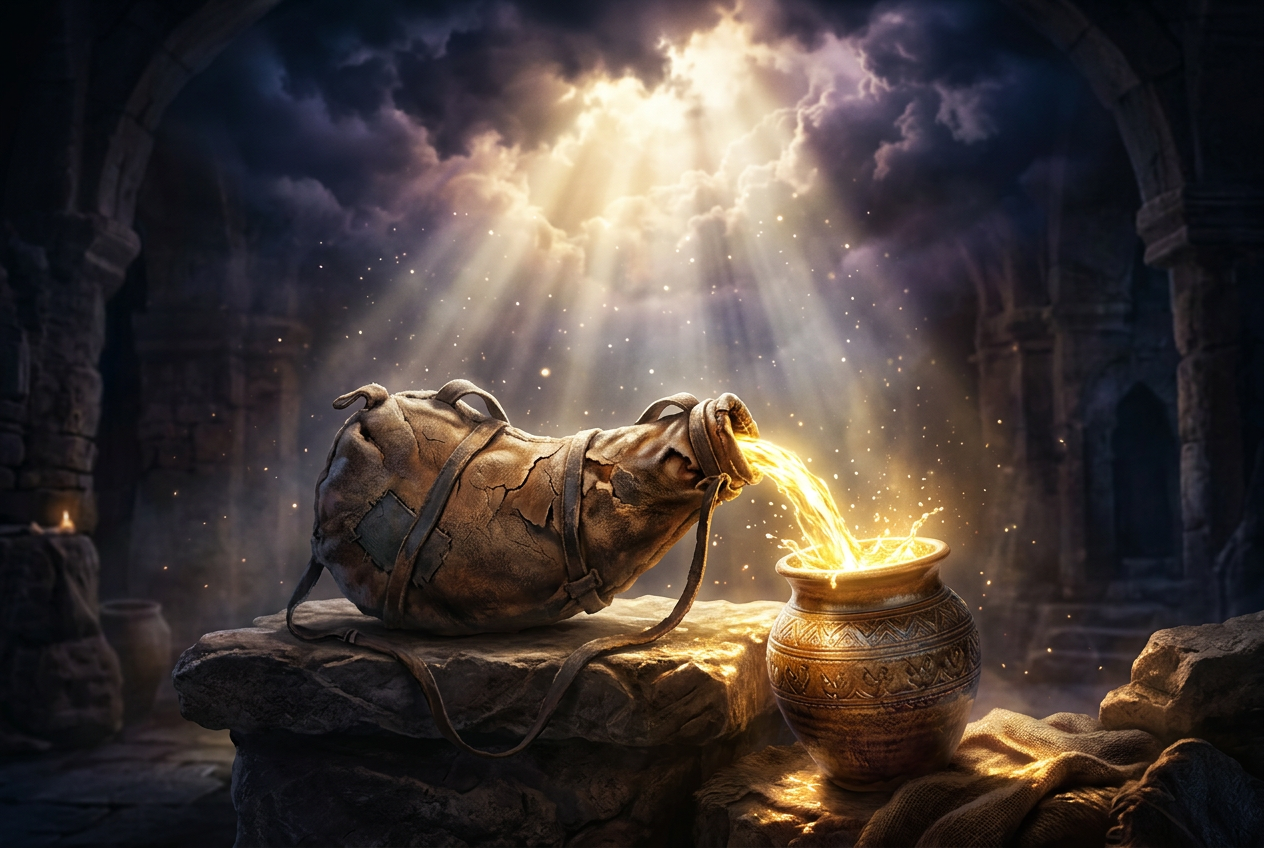
A wineskin was a leather bag used to hold wine. New leather was soft and could stretch. As wine aged it gave off gas, and fresh leather flexed to make room for it. Old leather, on the other hand, had already stretched as far as it would go and had turned hard and brittle. Pour new wine into an old skin and the pressure would split it. You lose the wine and the bag.
Daniel Duval teaches that the wine in this picture stands for the work of the Holy Spirit, meaning what God is actively doing among His people. The wineskin stands for the structure that holds it: the way a church or a movement is organized, what it believes, and how it does things. When God starts doing something fresh, an old and hardened structure often cannot stretch to hold it. Something has to give.
Why Are There So Many Denominations?
Here is where the pattern shows up.
To an outsider, the divisions in church history can look like a long string of arguments. One group reads the Bible and believes one thing. Another group reads the same Bible and believes something else. They split. Repeat that a few hundred times and you get the map of denominations we have today.
Daniel Duval offers a different read. He teaches that most of those major splits were not two people deciding to disagree. They were moments when God poured out fresh understanding that the existing church could not hold.
Think of how the picture plays out across history. For centuries much of the church taught that people earn their way to God by good works. Then God brought back a truth the church had lost: that we are made right with God by grace, through faith in Jesus, not by our own performance. That fresh understanding could not fit inside the old structure, so a new one formed around it. Later, God restored another truth, that baptism is for people old enough to choose to follow Jesus, by being fully placed under the water, the way the New Testament shows it. The structures already in place rejected it, and once again a new wineskin formed to carry it.
Each move added something the church had been missing. Each one met resistance from the structures already in place. And each time, the new wine ended up in a new wineskin.
New Wine Does Not Erase the Old
One detail in Jesus's words is easy to miss, and Daniel Duval points it out: both are preserved.
“But they put new wine into new wineskins, and both are preserved. (Matthew 9:17)”
When the new structure forms, the old one does not vanish. It stays. After each restoration, the groups that came before remained. This tells us something important about how God works. A fresh move of God is not Him throwing away everyone who came earlier. It is Him adding more truth to what His people already carry, stage by stage, like a parent who teaches a child one thing at a time instead of everything at once.
That reframes the whole map. The differences between Christian groups are not only sad accidents of pride and argument. Many of them mark real places where God restored something that had been lost. Seen that way, church history reads less like a pile of breakups and more like a long, patient work of restoration.
This idea has deep roots in Scripture. After Peter healed a man at the temple, he told the crowd that Jesus would stay in heaven "until the times of restoration of all things" (Acts 3:21). God is not finished restoring. There is more wine to pour.
What God Is Pouring Out Now
If that pattern is real, it raises a personal question. When God pours out something fresh in our own day, will the structures we are part of be able to hold it, or will they crack and spill it?
Daniel Duval teaches that the church is moving toward a fullness it has not yet reached. The Bible describes a coming maturity, a day when God's people grow up "to the unity of the faith and of the knowledge of the Son of God, to a perfect man, to the measure of the stature of the fullness of Christ" (Ephesians 4:13). That is new wine on a scale the church has not seen. The honest question is whether our wineskins are soft enough to hold it.
This is where the picture gets practical. Becoming a new wineskin is not mainly about leaving your church or chasing the newest trend. It is about the condition of your own heart. A hardened wineskin is a heart that has decided it already has the whole truth and stopped listening. A soft one stays teachable. It can receive something from God that it did not expect, even when that takes time and even when it does not fit what was learned before.
Daniel often points to how God moves toward unity. Real unity is not everyone agreeing to disagree and going their separate ways. It is people from every genuine move of God coming together around the full truth He has been restoring all along. In his teaching he compares it to the animals entering Noah's ark: they went in two by two, only certain ones from each kind, and to get there they had to leave their old habitats behind. In the same way, the people who step into true unity are the ones willing to loosen their grip on partial views and gather around what the Spirit is doing now.
How to Stay a New Wineskin
So how do you keep your heart soft enough to hold what God is doing? It comes down to a few honest habits.
Stay teachable. Hold your understanding of God with open hands, sure of the core of the gospel yet humble enough to admit you have not arrived. The brittle wineskin is the one that stopped learning.
Test what is new without fearing it. The answer to a strange-sounding idea is not panic and it is not blind acceptance. It is to weigh it against Scripture, with prayer and with wise, trusted believers around you. Some things that sounded "new" at first turned out to be old truths God was bringing back. Some were not from Him at all. Discernment, not fear, sorts them out.
Watch for pride dressed up as conviction. It is easy to call my position "the truth" and everyone else's "error," when the real issue is that I do not want to be stretched. A soft heart can tell the difference between standing firm on the gospel and simply refusing to grow.
Stay connected to the wider body of Christ. Daniel Duval teaches that God is knitting His people into one structure, described in Scripture as living stones being built together into a spiritual house. You cannot become part of that on your own. If you want to learn more about how God is building His people into one, the article on Zion, the New Jerusalem, and living stones opens up that picture. And because this restoration is tied to where history is heading, Daniel's teaching on what he believes about the end times helps put the whole pattern in its larger frame.
The deepest work, though, happens inside. A wineskin turns hard through wounds, fear, and old beliefs that quietly tell us we already know best. Bride Movement built a free healing assessment to help you find what may be keeping your heart from softening. It takes about two minutes, it is private, and it points you toward a next step. God is still pouring. The question worth asking is whether you are ready to hold it.
You can also explore the free Bride Ministries Prayer Library for prayers that help open a heart to what God is doing.
Start Your Healing Journey
Take the Free Assessment