Every Side in This Ideological War Wants a Different End of the World
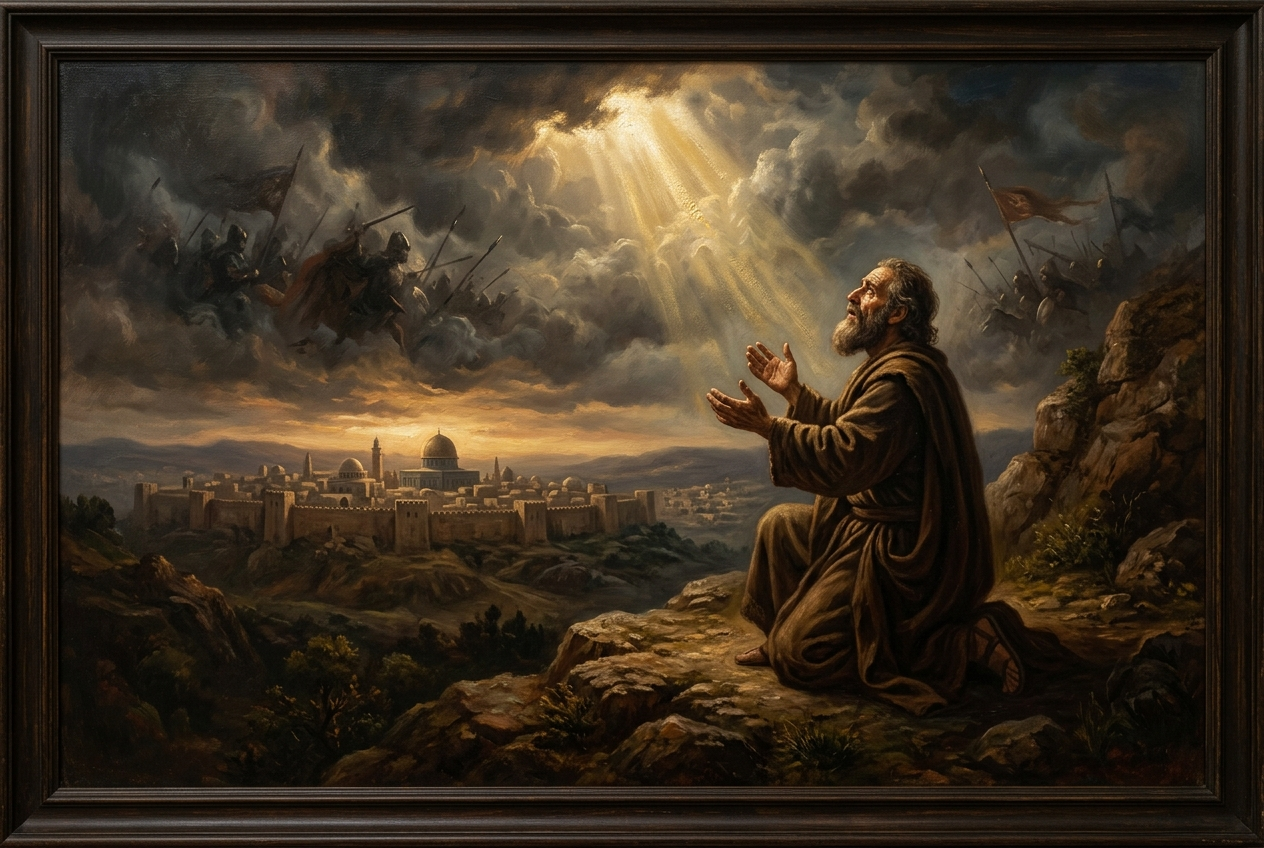
A few days after the United States bombed Iran, Daniel Duval prayed and asked God what was actually going on. He lays out what he saw in the Spirit on "Ideologies at War," his episode on the Discovering Truth with Dan Duval podcast, and watch the full teaching here if you want it straight from him. In short, he says this conflict is not really about oil, land, or bases. He calls it an ideological war, a fight between belief systems over how the world is supposed to end. That one idea changes how a Christian reads the headlines.
A Scorpion the Size of a City
Leaders were promising a short, in-and-out operation. In prayer, Duval saw something very different: a scorpion the size of a city, positioned over that region in the spirit realm. A scorpion facing a threat does one of two things. It runs, or it drops low into a defensive stance, locks in place, and primes its claws and stinger to strike. This one took the stance.
Then a vast grid spread out beneath it, an international web he understood to be sleeper cells waiting across the world.
His conclusion is sober. Whatever governments announce, this conflict will not wrap up quickly, and heaven's guidance is to get ready for a changed world.
What Makes This an Ideological War?
Duval teaches that wars over interests can end at a negotiation table. Two parties trade, sign, and go home. Wars over beliefs cannot end that way, because each side is convinced it is living out destiny.
This is where a churchy word becomes useful: eschatology. It simply means what someone believes about how the world's story ends. Duval explains that this conflict plugs into rival eschatologies. People are not just reacting to events. They read them as proof that their ending is coming true.
Whose End Times Beliefs Are Driving the Conflict?
Duval walks through the map. Shia Muslims (the majority in Iran) await a hidden twelfth Imam they expect to appear before a return of Jesus. Many Sunni Muslims expect a coming leader called the Mahdi to guide them through a great conflict. For both, war in the region can look like a sign that the promised figure is near.
Then there is political Zionism, the belief that the land promised to Abraham in Genesis 15 should be claimed as Greater Israel today. Duval points out something many churchgoers have never heard: only one stream of Christian teaching, dispensational premillennialism, makes room for political Zionism in God's end times plan. Catholic teaching rejects it. Another camp says the end already happened centuries ago and has stopped looking for an Antichrist at all. Duval himself holds historic premillennialism, an older view passed down from early church leaders Irenaeus and Hippolytus, who trace through Polycarp to the apostle John. He lays out his position in What I Believe About the End Times and in his teaching on political Zionism and Jewish identity.
The point is not to crown a winner. When this many groups believe the same war is their doorway to the end of the age, the scorpion has no reason to back down.
It helps to say plainly what is not being claimed here. Naming a belief system is not the same as naming an enemy, and reading a war through prophecy is not the same as predicting one. Duval offers a lens for understanding why this conflict resists a negotiated ending, not a timetable for how it closes.
Daniel walks through each of these positions with far more nuance in the episode itself. This summary only sketches the map.
The Agenda Underneath the Agendas
Beneath the competing religions, Duval teaches that a darker plan is at work: an occult agenda to make Jerusalem the capital of a one-world government, merging advanced technology with what he plainly calls sorcery. He connects this to Kabbalah, a mystical system he examines in The Secret of Leviathan, which aims at humanity saving itself into a universal consciousness. Scripture already names where the beast system plants its flag: Revelation 11 places the two witnesses in Jerusalem, and Zechariah 14 points to the same city.
Who Is the Real Enemy Here?
Not Muslims waiting for their Mahdi. Not Jewish people waiting for a different Messiah. Not the Christians on either side of the Zionism debate. Duval is emphatic on this. The apostle Paul writes in Ephesians 6:12, "For we do not wrestle against flesh and blood, but against principalities, against powers, against the rulers of the darkness of this age, against spiritual hosts of wickedness in the heavenly places" (NKJV).
So Duval hands his listeners homework instead of predictions. Ask yourself why you believe the end times beliefs you hold. Did you inherit them, or did you test them against Scripture? Then pray a better question than "when does it end": God, what is my role, and how do I make the enemy's plans as difficult as possible? Believers were sent here for such a time as this, as opponents of dark agendas, never assistants to them.
This summary only scratches the surface of what Daniel unpacks in the full episode. Press play below to hear it directly from him, and if you want to learn to read Scripture and the times with that kind of depth, the Bride Ministries Institute exists to train you.
Take the Next Step Toward Healing
Learn More